Browse our
Book Shop
- General Works
- Armies
- Russia 1812
- Biographies and Memoirs
- Films and Television
- Peninsular War
- Naval Warfare
General Works
 Wargames Terrain & Buildings The Napoleonic Wars, Tony Harwood.
Covers nine different projects, mainly for stand-alone buildings, but including a well and a diorama made of several buildings, taking us from the original concept, through the entire modelling process and on to the painting. The author’s results are very impressive, and the techniques he uses are clearly explained and do appear to be reasonably achieveable by anyone with a bit of modelling experience (although it will take some time and practice to get close to the same results!) (Read Full Review)
Wargames Terrain & Buildings The Napoleonic Wars, Tony Harwood.
Covers nine different projects, mainly for stand-alone buildings, but including a well and a diorama made of several buildings, taking us from the original concept, through the entire modelling process and on to the painting. The author’s results are very impressive, and the techniques he uses are clearly explained and do appear to be reasonably achieveable by anyone with a bit of modelling experience (although it will take some time and practice to get close to the same results!) (Read Full Review)






 Fighting the French Revolution – The Great Vendee Rising of 1793, Rob Harper.
A detailed history of one of the most serious threats to the young French Republic, which saw Royalist rebels in the west of France inflict a series of defeats on the Republicans in a civil war that became increasingly bitter and costly, and dragged in many commanders who would later rise to high rank. Very good on the details of the individual battles and skirmishes that made up this conflict, with a good use of sources from both sides (Read Full Review)
Fighting the French Revolution – The Great Vendee Rising of 1793, Rob Harper.
A detailed history of one of the most serious threats to the young French Republic, which saw Royalist rebels in the west of France inflict a series of defeats on the Republicans in a civil war that became increasingly bitter and costly, and dragged in many commanders who would later rise to high rank. Very good on the details of the individual battles and skirmishes that made up this conflict, with a good use of sources from both sides (Read Full Review)


 The Duke of York’s Flanders Campaign – Fighting the French Revolution, 1793-1795, Steve Brown.
Looks at the Flanders campaigns of the War of the First Coalition, the first major British involvement in the Revolutionary Wars and the campaigns in which the ‘old style’ Eighteenth Century armies and leadership of the Coalition proved lacking when faced with the new armies of Revolutionary France. Focuses on the British (and hired German) contribution, and the role of the young Duke of York, whose Royal status gave him a command that his military experience didn’t justify (Read Full Review)
The Duke of York’s Flanders Campaign – Fighting the French Revolution, 1793-1795, Steve Brown.
Looks at the Flanders campaigns of the War of the First Coalition, the first major British involvement in the Revolutionary Wars and the campaigns in which the ‘old style’ Eighteenth Century armies and leadership of the Coalition proved lacking when faced with the new armies of Revolutionary France. Focuses on the British (and hired German) contribution, and the role of the young Duke of York, whose Royal status gave him a command that his military experience didn’t justify (Read Full Review)


 The Two Battles of Copenhagen 1801 and 1807 - Britain and Denmark in the Napoleonic Wars, Gareth Glover.
Looks at the entire relationship between Britain and Denmark during the Napoleonic Wars, a period which saw Denmark directly threatened by the French dominance of Germany, but also twice attacked by Britain over fears that she might have blocked British access to the Baltic, a source of important naval supplies. Covers those two attacks in the most detail, but also provides a good account of the rest of the period, the reasons for the two attacks, and their aftermath (Read Full Review)
The Two Battles of Copenhagen 1801 and 1807 - Britain and Denmark in the Napoleonic Wars, Gareth Glover.
Looks at the entire relationship between Britain and Denmark during the Napoleonic Wars, a period which saw Denmark directly threatened by the French dominance of Germany, but also twice attacked by Britain over fears that she might have blocked British access to the Baltic, a source of important naval supplies. Covers those two attacks in the most detail, but also provides a good account of the rest of the period, the reasons for the two attacks, and their aftermath (Read Full Review)


 Egypt 1801- The End of Napoleon’s Eastern Empire, Stuart Reid.
Looks at the successful British campaign to expel the French from Egypt, carried out in a hurry to make sure that France wasn’t able to retain the area in the upcoming peace treaty, and that was one of the few clear British military successes in the first half of the Revolutionary and Napoleonic Wars. Covers the formation and training of the British army under Abercromby, the impressive opposed landing at Aboukir, the eventual successes under General Hely-Hutchinson, as well as the French response and the Ottoman involvement (Read Full Review)
Egypt 1801- The End of Napoleon’s Eastern Empire, Stuart Reid.
Looks at the successful British campaign to expel the French from Egypt, carried out in a hurry to make sure that France wasn’t able to retain the area in the upcoming peace treaty, and that was one of the few clear British military successes in the first half of the Revolutionary and Napoleonic Wars. Covers the formation and training of the British army under Abercromby, the impressive opposed landing at Aboukir, the eventual successes under General Hely-Hutchinson, as well as the French response and the Ottoman involvement (Read Full Review)


 A Waste of Blood & Treasure - The 1799 Anglo-Russian Invasion of the Netherlands, Philip Ball.
A look at one of the least succesful British campaigns of the Revolutionary Wars, the Anglo-Russian attempt to free the Netherlands from French control that ended with a negotiated retreat, largely on French terms, after three costly battles fought in difficult terrain close to the Dutch coast. Looks at the reasons for the failure of the expedition, as well as providing a detailed narrative of the fairly short campaign. A good study of this brief but disasterous Anglo-Russian campaign
(Read Full Review)
A Waste of Blood & Treasure - The 1799 Anglo-Russian Invasion of the Netherlands, Philip Ball.
A look at one of the least succesful British campaigns of the Revolutionary Wars, the Anglo-Russian attempt to free the Netherlands from French control that ended with a negotiated retreat, largely on French terms, after three costly battles fought in difficult terrain close to the Dutch coast. Looks at the reasons for the failure of the expedition, as well as providing a detailed narrative of the fairly short campaign. A good study of this brief but disasterous Anglo-Russian campaign
(Read Full Review)


 Wellington and the British Army’s Indian Campaigns 1798-1805, Martin R. Howard.
Looks at the wider context to Wellington’s time in India, covering most of the military campaigns that took place while he was present, not just those in which he was involved. A little weak on the Indian side of the fighting, but otherwise good, and provides some useful context to Wellington’s famous victories of this period(Read Full Review)
Wellington and the British Army’s Indian Campaigns 1798-1805, Martin R. Howard.
Looks at the wider context to Wellington’s time in India, covering most of the military campaigns that took place while he was present, not just those in which he was involved. A little weak on the Indian side of the fighting, but otherwise good, and provides some useful context to Wellington’s famous victories of this period(Read Full Review)


 Britain’s Last Invasion – the Battle of Fishguard 1797, Phil Carradice.
A fascinating look at the last time foreign troops landed on British soil, a rather farsical French landing on the remote Pembrokeshire coast that only lasted for a few days, but that lived on much longer in local legend. Traces the evolution of the French plan, the local response to it and the rapid collapse of the invasion
(read full review)
Britain’s Last Invasion – the Battle of Fishguard 1797, Phil Carradice.
A fascinating look at the last time foreign troops landed on British soil, a rather farsical French landing on the remote Pembrokeshire coast that only lasted for a few days, but that lived on much longer in local legend. Traces the evolution of the French plan, the local response to it and the rapid collapse of the invasion
(read full review)


 Walcheren to Waterloo - The British Army in the Low Countries during the French Revolutionary & Napoleonic Wars 1793-1815, Andrew Limm.
A good history of the unsuccessful British campaigns in the Low Countries between 1793 and 1814, looking in detail at how each army was organised and led, and examining the reasons for their general lack of success. Less convincing when looking at the idea of a transformation of the British military, although this does provide a different viewpoint of these campaigns
(Read Full Review)
Walcheren to Waterloo - The British Army in the Low Countries during the French Revolutionary & Napoleonic Wars 1793-1815, Andrew Limm.
A good history of the unsuccessful British campaigns in the Low Countries between 1793 and 1814, looking in detail at how each army was organised and led, and examining the reasons for their general lack of success. Less convincing when looking at the idea of a transformation of the British military, although this does provide a different viewpoint of these campaigns
(Read Full Review)


 Lutzen and Bautzen - Napoleon's Spring Campaign of 1813, George Hafziger.
A very detailed account of the spring campaign of 1813, starting at the end of the retreat from Moscow, tracing the creation of a fresh French army, Napoleon’s victories at Lutzen and Bautzen, and his inability to turn either of them into a war winner. This was Napoleon’s last realistic chance of saving his Empire, and thus a more significant campaign than is often acknowledged. Once the campaign ended in an armistice and Austrian joined the war against him, Napoleon’s last real chance of surviving had gone, so this campaign and its two main battles deserve this detailed examination (Read Full Review)
Lutzen and Bautzen - Napoleon's Spring Campaign of 1813, George Hafziger.
A very detailed account of the spring campaign of 1813, starting at the end of the retreat from Moscow, tracing the creation of a fresh French army, Napoleon’s victories at Lutzen and Bautzen, and his inability to turn either of them into a war winner. This was Napoleon’s last realistic chance of saving his Empire, and thus a more significant campaign than is often acknowledged. Once the campaign ended in an armistice and Austrian joined the war against him, Napoleon’s last real chance of surviving had gone, so this campaign and its two main battles deserve this detailed examination (Read Full Review)


 Death before Glory! The British Soldier in the West Indies in the French Revolutionary and Napoleonic Wars 1793-1815, Martin R. Howard.
Looks at the costly campaigns in the West Indies, where disease was often more dangerous for either side than their opponents. Well organised, split into three - the armies, the campaigns and the soldier's experiences, and gives a good picture of a series of difficult campaigns, where isolated, disease afflicted, British forces slowly came to dominate the area
(Read Full Review)
Death before Glory! The British Soldier in the West Indies in the French Revolutionary and Napoleonic Wars 1793-1815, Martin R. Howard.
Looks at the costly campaigns in the West Indies, where disease was often more dangerous for either side than their opponents. Well organised, split into three - the armies, the campaigns and the soldier's experiences, and gives a good picture of a series of difficult campaigns, where isolated, disease afflicted, British forces slowly came to dominate the area
(Read Full Review)


 The Forgotten War Against Napoleon - Conflict in the Mediterranean 1793-1815, Gareth Glover.
Covers the full range of British commitments in the Mediterranean theatre, from the early siege of Toulon through to the brief campaigns that accompanied Napoleon's return from exile in 1815. A well researched and readable account of more than twenty years of warfare that covered the full length of the Mediterranean, making it clear just how significant the British commitment was in this theatre [read full review]
The Forgotten War Against Napoleon - Conflict in the Mediterranean 1793-1815, Gareth Glover.
Covers the full range of British commitments in the Mediterranean theatre, from the early siege of Toulon through to the brief campaigns that accompanied Napoleon's return from exile in 1815. A well researched and readable account of more than twenty years of warfare that covered the full length of the Mediterranean, making it clear just how significant the British commitment was in this theatre [read full review]


 Who was Who in the Napoleonic Wars, Philip J Haythornthwaite Covers over one thousand of the most important political, military, civil and artistic figures of the Revolutionary and Napoleonic period, from all of the combatant powers. A very useful reference book that shows just how widely this first 'Great War' spread its influence. Each biography is short, with three to a page, but this allows the author to fit in so many differing characters.


 Triumph & Disasters - Eyewitness Accounts of the Netherlands Campaign 1813-1814, Andrew Bamford.
Six eyewitness accounts of the British campaign in the Netherlands in 1813-1814, best known for the disastrous attack on Bergen-op-Zoom. The fairly vacuous diary of a young Guards officer will probably stick longest in the mind, but all six sources are of value for gaining an understanding of this campaign, and of the British military experience during the Napoleonic Wars, covering a wide range of topics from the pleasures of the hunt to the humiliation of being a prisoner [read full review]
Triumph & Disasters - Eyewitness Accounts of the Netherlands Campaign 1813-1814, Andrew Bamford.
Six eyewitness accounts of the British campaign in the Netherlands in 1813-1814, best known for the disastrous attack on Bergen-op-Zoom. The fairly vacuous diary of a young Guards officer will probably stick longest in the mind, but all six sources are of value for gaining an understanding of this campaign, and of the British military experience during the Napoleonic Wars, covering a wide range of topics from the pleasures of the hunt to the humiliation of being a prisoner [read full review]


 The End of Empire: Napoleon's 1814 Campaign, George Nafziger .
A very detailed examination of Napoleon's attempts to defend France against a massive Allied invasion early in 1814. Despite one of his best performances Napoleon was unable to take advantage of poor Allied leadership, and was actually absent when the Allies finally captured Paris, fatally undermining his legitimacy and public support and ending his regime (at least until 1815). [read full review]
The End of Empire: Napoleon's 1814 Campaign, George Nafziger .
A very detailed examination of Napoleon's attempts to defend France against a massive Allied invasion early in 1814. Despite one of his best performances Napoleon was unable to take advantage of poor Allied leadership, and was actually absent when the Allies finally captured Paris, fatally undermining his legitimacy and public support and ending his regime (at least until 1815). [read full review]


 The Napoleonic Art of Keith Rocco, Peter Harrington. Looks at the paintings of a modern proponent of the historical painting genre, with high quality prints of a wide selection of his paintings, ranging from studies of individual soldiers to large scale battle scenes. Supported by a useful text that explains the historical context for the painting and the artist's methods and motivation. [read full review]


 Walcheren 1809, Martin R. Howard. A history of one of the great disasters of British military history, when a large army was sent to try and capture Antwerp but stalled at Walcheren where disease destroyed the army. A good study of a failed amphibious expedition and an example of how not to carry out a large scale expedition [read full review]


 The Battle of Maida 1806, Fifteen Minutes of Glory, Richard Hopton. A detailed account of the first significant victory won by the British army against the troops of Napoleonic France, fought in southern Italy after the failure of the Third Coalition. An excellent account of the background to the battle, the fighting at Maida, the aftermath and its significance within the wider Napoleonic War. [read full review]


 The Art of War: Restored Edition, Baron Antoine Henri de Jomini.
Jomini's Art of War was one of the most important works of military theory to come out of the Napoleonic Wars, and for many years dominated military thinking on both sides of the Atlantic. This edition uses the standard translation of 1862, but with the addition of Jomini's introduction which includes some fascinating insights into his rivalry with Clausewitz. No longer an essential book for every budding military commander, the Art of War is still invaluable for anyone with a serious interest in the Napoleonic Wars. [see more]
The Art of War: Restored Edition, Baron Antoine Henri de Jomini.
Jomini's Art of War was one of the most important works of military theory to come out of the Napoleonic Wars, and for many years dominated military thinking on both sides of the Atlantic. This edition uses the standard translation of 1862, but with the addition of Jomini's introduction which includes some fascinating insights into his rivalry with Clausewitz. No longer an essential book for every budding military commander, the Art of War is still invaluable for anyone with a serious interest in the Napoleonic Wars. [see more]


 Oxford History of the French Revolution, William Doyle, OUP, 2003, 496 pages.
A well written, detailed account of the events that led up to the French Revolution, the events of 1789 that sent shockwaves throughout Europe, the descent into chaos and terror and the various attempts that were made to form a stable republican government, ending with the coup that brought Napoleon Bonaparte to power [SEE MORE]


Biographies and Memoirs
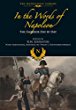 In the Words of Napoleon - The Emperor Day by Day, ed. R.M. Johnston.
Originally produced in 1910 from a wide range of Napoleonic sources in an attempt to produce an artificial 'Napoleon Diary'. The result is an entertaining read, although the lack of references is unfortunate, and like any selection of writings we are limited by the original editor's choices. Despite those limits, it does provide an interesting insight into how Napoleon saw his own actions, and how his attitudes changed over time [read full review]
In the Words of Napoleon - The Emperor Day by Day, ed. R.M. Johnston.
Originally produced in 1910 from a wide range of Napoleonic sources in an attempt to produce an artificial 'Napoleon Diary'. The result is an entertaining read, although the lack of references is unfortunate, and like any selection of writings we are limited by the original editor's choices. Despite those limits, it does provide an interesting insight into how Napoleon saw his own actions, and how his attitudes changed over time [read full review]


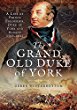 The Grand Old Duke of York - A Life of Frederick, Duke of York and Albany, 1763-1827, Derek Winterbottom .
The first biography of the British Commander-in-Chief during the Napoleonic Wars for sixty years, this paints a generally positive picture of the Duke, who emerges as a capable Commander-in-Chief who introduced a series of useful reforms in the British Army, and probably helped keep the army loyal during the long Revolutionary and Napoleonic Wars. Good coverage of his period as a field commander in the Low Countries, and his fairly colourful private life [read full review]
The Grand Old Duke of York - A Life of Frederick, Duke of York and Albany, 1763-1827, Derek Winterbottom .
The first biography of the British Commander-in-Chief during the Napoleonic Wars for sixty years, this paints a generally positive picture of the Duke, who emerges as a capable Commander-in-Chief who introduced a series of useful reforms in the British Army, and probably helped keep the army loyal during the long Revolutionary and Napoleonic Wars. Good coverage of his period as a field commander in the Low Countries, and his fairly colourful private life [read full review]


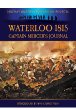 Waterloo 1815 - Captain Mercer's Journal, ed. W.H. Fitchett. A fascinating account of the Waterloo campaign as seen by an officer in the horse-artillery, focusing almost entirely on events as they were known to Mercer at the time. As a result we get a real idea of the fog of war and just how little an participant in a major battle might know about the wider events of the day. [read full review]


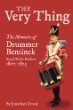 The Very Thing: The Memoirs of Drummer Richard Bentinck, Royal Welch Fusiliers 1807-1823, Jonathan Crook. Based on a series of interviews conducted with Bentinck in 1873 and a narrative that he dictated in his old age, and supported by a historical narrative that fills the gaps and explains the context of the memoirs, this is a fascinating view of the life of the British soldier in the Napoleonic Wars. [read full review]


Albuera
 Albuera 1811, The Bloodiest Battle of the Peninsular War, Guy Dempsey. A detailed account of the battle itself, supported by useful material on the wider campaign, the treatment of the wounded and dead and the arguments wages long after the battle by many of the main figures involved in the fighting. [read full review]


Aspern, Wagram and the War of 1809
 Napoleon and the Archduke Charles - A History of the Franco-Austrian Campaign in the valley of the Danube 1809, F. Loraine Petre.
Covers Napoleon’s final victorious campaign, the hard fought victory over Austria that also saw him suffer his first significant battlefield defeat at Aspern-Essling, as well as the eventual victory at Wagram. Traces the failures and successes of both senior commanders, and the early signs of a reduction in the quality of the French army. A good account despite being over a century old(Read Full Review)
Napoleon and the Archduke Charles - A History of the Franco-Austrian Campaign in the valley of the Danube 1809, F. Loraine Petre.
Covers Napoleon’s final victorious campaign, the hard fought victory over Austria that also saw him suffer his first significant battlefield defeat at Aspern-Essling, as well as the eventual victory at Wagram. Traces the failures and successes of both senior commanders, and the early signs of a reduction in the quality of the French army. A good account despite being over a century old(Read Full Review)


 1809 Thunder on the Danube: Napoleon's Defeat of the Habsburgs, Volume II: Aspern, John H. Gill. The second volume in this high quality series looks at the fall of Vienna and Napoleon's first defeat at Aspern-Essling, as well as widening the picture to look at events in Italy and Dalmatia. Brilliantly researched and yet thoroughly readable, this is an essential book for anyone interested in the period. [read full review]


 1809 Thunder on the Danube: Napoleon's Defeat of the Habsburgs, Volume I: Abensberg, John H. Gill. The first volume in a monumental account of the 1809 war between France and the Habsburg Empire, Napoleon's last victorious war, looking at the reasons behind the Austrian declaration of war and the early battles that ended the Austrian invasion of Bavaria and paved the war for Napoleon's campaign around Vienna. [read full review]


 1809 Thunder on the Danube: Napoleon's Defeat of the Habsburgs, Volume III: Wagram and Znaim, John H. Gill. The third part of a very impressive narrative history of the War of the Fifth Coalition, looking at the final battles at Wagram and Znaim and the subsidiary campaigns in Poland, Hungary, Dalmatia, Styria and the Tyrol. Manages to be both very detailed and readable and coherent, a very impressive achievement. [read full review]


 Aspern and Wagram, 1809, Ian Castle. An interesting Osprey campaign book covering some of the largest but often forgotten battles of the Napoleonic wars, including Aspern, Napoleon's first defeat on the battlefield. It is clearly written and of great use to those interested in the Austrian Army of the period [see more]


Austerlitz
 Austerlitz 1805, Ian Castle An excellent introduction to one of the most famous battles in History and a classic of military deception and manoeuvring. Austerlitz was the battle which truly establishes Napoleons reputation. [see more]


 Austerlitz 1805 , David G.Chandler, A detailed and colourful book written by one of the accepted experts on the Napoleonic period. This book contains excellent 2D and 3D maps and a guide to wargaming the battle.


Badajoz
 Badajoz, 1812: Wellingtons Bloodiest Siege, Ian Fletcher. The town of Badajoz was much fought over during the Peninsular war and this detailed and lengthy osprey covers the siege of 1812 which was the hardiest fought and bloodiest of the war, in whose aftermath the British army displayed savagery and wanton destruction rarely seen as the British troops brutally sacked the town. [see more]


The Berezina
 Berezina 1812 – Napoleon’s Hollow Victory, Alexander Mikaberidze.
Looks at the last relative French success of the Russian campaign of 1812, when a combination of Russian mistakes and hard fighting by the French and their allies allowed some of the survivors of Napoleon’s Grand Armee to cross the Berezina River, despite being hunted by much larger Russian forces. Good coverage of the build-up to battle, looking at the disjointed Russian pursuit of Napoleon, the reasons their attempt to trap him at the Berezina failed, as well as the French efforts to escape from the trap (Read Full Review)
Berezina 1812 – Napoleon’s Hollow Victory, Alexander Mikaberidze.
Looks at the last relative French success of the Russian campaign of 1812, when a combination of Russian mistakes and hard fighting by the French and their allies allowed some of the survivors of Napoleon’s Grand Armee to cross the Berezina River, despite being hunted by much larger Russian forces. Good coverage of the build-up to battle, looking at the disjointed Russian pursuit of Napoleon, the reasons their attempt to trap him at the Berezina failed, as well as the French efforts to escape from the trap (Read Full Review)


 The Battle of the Berezina, Napoleon's Great Escape, Alexander Mikaberidze. A very detailed account of the battles on the Berezina River that marked the end of the real fighting during Napoleon's disastrous Russian campaign of 1812 and saw Napoleon and his Marshals escape from between three Russian armies, although at a heavy cost. [read full review]


Borodino
 Borodino 1812, Napoleon's Great Gamble, Philip Haythornthwaite. Two thirds a history of the 1812 campaign and one third an account of the battle of Borodino itself, this is a successful shorter history of Napoleon's doomed invasion of Russia. Gives a clearer view of a battle than is sometimes the case in longer works [read full review]


 The Battle of Borodino, Napoleon against Kutuzov, Alexander Mikaberidze. A valuable new study of the bloody battle of Borodino, looking at the course of the battle and examining the many historical controversies that have grown up since the fighting ended, both at the time and in later historical debates. [read full review]


Corunna
 Corunna 1809, Philip J. Haythornthwaite. A 96 page Osprey campaign book written by one of the leading authors on the Peninsular war. It is packed full of 3 D maps, colour artist plates and black and white images and some contemporary photographs of the battle area. It is better organised and laid out than many Ospreys which makes for better reading and includes orders of battle for the forces involved [see more]


EggMuhl
 EggMuhl 1809, Ian Castle.
A very detailed account of this complex campaign with the usual high standard of 3 d battle maps, black and white and colour pictures and impressive battle scenes. Includes sections on war gaming the campaign and the battlefields today. Very useful for anyone looking at the Austrian army of the time and sheds light on events in Europe that are often over looked due to the Peninsular war. [SEE MORE]
EggMuhl 1809, Ian Castle.
A very detailed account of this complex campaign with the usual high standard of 3 d battle maps, black and white and colour pictures and impressive battle scenes. Includes sections on war gaming the campaign and the battlefields today. Very useful for anyone looking at the Austrian army of the time and sheds light on events in Europe that are often over looked due to the Peninsular war. [SEE MORE]


Jena
 Jena, 1806, David Chandler. A 96 page osprey campaign book with the usual winning combination of orders of battle, 3D and 2D colour maps, black and white plates and colour plates. This book covers the campaign which many feel was Napoleon's best and which the German high command took inspiration from when planning the Blitzkrieg of World War Two. [see more]


Leipzig
 Leipzig 1813: The Battle of the Nations, Peter Hofschroer, Osprey, 1993, 96 pages. A very well regarded entry in the Osprey catalogue, covering not just the battle of Leipzig but the entire German campaign of 1813 that led to the final collapse of Napoleon's empire. [see more]


Marengo
 The Battle of Marengo, 1800, Olivier Lapray.
An account of the battle of Marango told largely from the French point of view, starting with northern Italy back in Austrian hands and tracing Napoleon's successful efforts to restore his earlier conquests. The main strength of this book is the excellent selection of pictures, covering Napoleon's dramatic crossing of the Alps, the advance into Italy, the two armies and the battle itself. [read full review]
The Battle of Marengo, 1800, Olivier Lapray.
An account of the battle of Marango told largely from the French point of view, starting with northern Italy back in Austrian hands and tracing Napoleon's successful efforts to restore his earlier conquests. The main strength of this book is the excellent selection of pictures, covering Napoleon's dramatic crossing of the Alps, the advance into Italy, the two armies and the battle itself. [read full review]


 Marengo 1800 , David Hollins, A well illustrated and colour book containing a vast amount of detail on this important early Napoleonic battle. Contains an extensive guide to wargamming the campaign


Salamanca
 Salamanca 1812 - Wellington's Year of Victories, Peter Edwards. A look at Wellington's campaigns of 1812, from the sieges of Ciudad Rodrigo and Badajoz to the triumph at Salamanca, the failure at Burgos and the retreat back to Portugal at the end of a year that saw the French permanently forced out of large parts of Spain. A good account of this campaign, copiously illustrated with carefully used eyewitness accounts. [read full review]


 Salamanca, 1812, Ian Fletcher. A comprehensive and easy to read study of what many consider the key battle in the Peninsular War. Once Wellington crushed the French at Salamanca, the British and their allies would have the upper hand in the long drawn out struggle to come. [see more]


Talavera
 Talavera 1809, René Chartrand. A good shorter history of one of Wellington's first victories in Spain, the defeat of King Joseph and Marshalls Victor and Jourdan at Talavera. Good on the problems within the French command, the difficult relationship between Wellington and his Spanish allies, and more generous to the Spanish than many English-language accounts of the battle. [read full review]


Vittoria
 Vittoria 1813, Ian Fletcher. A colourful and detailed account of the battle as well as event leading up to and in the aftermath. Filled with 3-d maps, colour and black and white plates and illustrations this is an excellent book. Sections cover war gaming the battle and the battlefield today, with the war game section being very detailed and discussing several types of game and methods of recreating the campaign. [SEE MORE]


Waterloo
 Wellington’s Foot Guards at Waterloo – the men who saved the day against Napoleon, Robert Burnham and Ron McGuigan.
Looks at the activities and strength of the four battalions of the Foot Guards that fought in the Waterloo campaign, where they defended Hougoumont and withstood Ney’s massive cavalry attack. Most of the book is a very detailed but still readable account of the Guards’s combat experience at Waterloo, but there is also an equally detailed anaylsis of the composition of the battalions, covering everything from the background of the commanding officers to the average height and hair colour of the troops! (Read Full Review)
Wellington’s Foot Guards at Waterloo – the men who saved the day against Napoleon, Robert Burnham and Ron McGuigan.
Looks at the activities and strength of the four battalions of the Foot Guards that fought in the Waterloo campaign, where they defended Hougoumont and withstood Ney’s massive cavalry attack. Most of the book is a very detailed but still readable account of the Guards’s combat experience at Waterloo, but there is also an equally detailed anaylsis of the composition of the battalions, covering everything from the background of the commanding officers to the average height and hair colour of the troops! (Read Full Review)


 The Battle of Waterloo, A Near Observer.
One of the earliest books published on the battle of Waterloo, made up of a series of letters written by eyewitnesses to the campaign, official reports from all sides (including some from countries not actually involved in the battle!) and finishing with casualties. First published in 1815, this is the seventh edition, which came out in the same year! You will find better collections of sources, but you won’t find one with quite the same immediacy as this. Also includes three foldouts, two with maps of the battle and one with an impressive panoramic sketch(Read Full Review)
The Battle of Waterloo, A Near Observer.
One of the earliest books published on the battle of Waterloo, made up of a series of letters written by eyewitnesses to the campaign, official reports from all sides (including some from countries not actually involved in the battle!) and finishing with casualties. First published in 1815, this is the seventh edition, which came out in the same year! You will find better collections of sources, but you won’t find one with quite the same immediacy as this. Also includes three foldouts, two with maps of the battle and one with an impressive panoramic sketch(Read Full Review)


 Battle for Paris 1815, Paul L. Dawson.
A look at the fighting between Waterloo and the official French surrender, mainly limited to a number of fairly minor encounters between the victorious Prussians and the retreating French. Suffers from something of an obsession with Grouchy that delays the start of the main topic by several chapters, but still has good archival material on the French side of this final campaign of the Napoleonic wars
(Read Full Review)
Battle for Paris 1815, Paul L. Dawson.
A look at the fighting between Waterloo and the official French surrender, mainly limited to a number of fairly minor encounters between the victorious Prussians and the retreating French. Suffers from something of an obsession with Grouchy that delays the start of the main topic by several chapters, but still has good archival material on the French side of this final campaign of the Napoleonic wars
(Read Full Review)


 The Long Shadow of Waterloo – Myths, Memories and Debates, Timothy Fitzpatrick.
An unusual approach to the battle of Waterloo, looking at the way in which the battle was remembered in the countries most closely involved, including the victors, where the main battle was over who had been responsible for the victory, in France, where the blame game began almost as soon as the fighting was over, and in Belgium, where the battle remained controversial for many years afterwards
(Read Full Review)
The Long Shadow of Waterloo – Myths, Memories and Debates, Timothy Fitzpatrick.
An unusual approach to the battle of Waterloo, looking at the way in which the battle was remembered in the countries most closely involved, including the victors, where the main battle was over who had been responsible for the victory, in France, where the blame game began almost as soon as the fighting was over, and in Belgium, where the battle remained controversial for many years afterwards
(Read Full Review)


 Waterloo - The Campaign of 1815 Volume 2 - From Waterloo to the Restoration of Peace in Europe, John Hussey.
A good history of Waterloo and its aftermath using the most recent research and ignoring long held ideas that have since been disproved. Has a useful focus on the command decisions made by the senior leaders on each side, and how they impacted on the eventual result of the campaign. Provides a well balanced examination of the successes and mistakes on both sides, as well as placing Waterloo in the wider context of the 1815 campaign
(Read Full Review)
Waterloo - The Campaign of 1815 Volume 2 - From Waterloo to the Restoration of Peace in Europe, John Hussey.
A good history of Waterloo and its aftermath using the most recent research and ignoring long held ideas that have since been disproved. Has a useful focus on the command decisions made by the senior leaders on each side, and how they impacted on the eventual result of the campaign. Provides a well balanced examination of the successes and mistakes on both sides, as well as placing Waterloo in the wider context of the 1815 campaign
(Read Full Review)


 Waterloo - Rout & Retreat, the French Perspective, Andrew W. Field.
Looks at the least familiar part of the Waterloo campaign, the French retreat in the aftermath of the battle, their attempts to restore some order in the defeat army and perhaps defend Paris, and the political attempts to negotiate a peace without an Allied occupation of Paris. Based on eyewitness accounts of the period, this paints an unvarnished picture of the collapse of an army and the increasingly uncertain attempts to try and organise a defence of Paris
(Read Full Review)
Waterloo - Rout & Retreat, the French Perspective, Andrew W. Field.
Looks at the least familiar part of the Waterloo campaign, the French retreat in the aftermath of the battle, their attempts to restore some order in the defeat army and perhaps defend Paris, and the political attempts to negotiate a peace without an Allied occupation of Paris. Based on eyewitness accounts of the period, this paints an unvarnished picture of the collapse of an army and the increasingly uncertain attempts to try and organise a defence of Paris
(Read Full Review)


 The Waterloo Archive Volume V: German Sources, ed. Gareth Glover.
A super selection of sources translated from German, reflecting the experience of the numerically most important nation at Waterloo, with Germans making up a sizable part of Wellington’s army, as well as Blucher’s Prussians. Almost entirely focuses on those troops in British or Dutch service, with the Prussians getting a single article. Covers the cavalry, artillery and six infantry divisions, as well as an inquiry into the behaviour of part of the medical corps. A useful selection of sources not previously available in English(Read Full Review)
The Waterloo Archive Volume V: German Sources, ed. Gareth Glover.
A super selection of sources translated from German, reflecting the experience of the numerically most important nation at Waterloo, with Germans making up a sizable part of Wellington’s army, as well as Blucher’s Prussians. Almost entirely focuses on those troops in British or Dutch service, with the Prussians getting a single article. Covers the cavalry, artillery and six infantry divisions, as well as an inquiry into the behaviour of part of the medical corps. A useful selection of sources not previously available in English(Read Full Review)


 Grouchy's Waterloo - The Battles of Ligny and Wavre, Andrew W. Field.
Focuses on Marshal Grouchy’s performance during the key days of the Waterloo campaign - his own actions, the behaviour of his senior subordinates, Napoleon’s orders to him, and how they all combined to affect the outcome of the campaign. Covers some of the most controversial moments of the Waterloo campaign and the post-war battle of allocate blame for the French defeat(Read Full Review)
Grouchy's Waterloo - The Battles of Ligny and Wavre, Andrew W. Field.
Focuses on Marshal Grouchy’s performance during the key days of the Waterloo campaign - his own actions, the behaviour of his senior subordinates, Napoleon’s orders to him, and how they all combined to affect the outcome of the campaign. Covers some of the most controversial moments of the Waterloo campaign and the post-war battle of allocate blame for the French defeat(Read Full Review)


 Wellington's Hidden Heroes - The Dutch and Belgians at Waterloo, Veronica Baker-Smith.
Looks at the contribution made by the army of the Kingdom of the Netherlands to Wellington's victory in the Waterloo campaign, where it made up one third of his army. Makes good use of Dutch and Belgian sources to produce a useful account of the role that this newly formed army played in Wellington's victory, although sometimes exaggerates the bias against this army in English language histories [read full review]
Wellington's Hidden Heroes - The Dutch and Belgians at Waterloo, Veronica Baker-Smith.
Looks at the contribution made by the army of the Kingdom of the Netherlands to Wellington's victory in the Waterloo campaign, where it made up one third of his army. Makes good use of Dutch and Belgian sources to produce a useful account of the role that this newly formed army played in Wellington's victory, although sometimes exaggerates the bias against this army in English language histories [read full review]


 Waterloo: The Decisive Victory, ed. Colonel Nick Lipscombe .
Ten excellent articles covering the main aspects of the Waterloo campaign, from the strategic background to the long term impact of the battle, as well as the main elements of the fighting itself. Provides good detailed examinations of the key elements of the battle, in particular the main cavalry charges and the Prussian contribution to the fighting [read full review]
Waterloo: The Decisive Victory, ed. Colonel Nick Lipscombe .
Ten excellent articles covering the main aspects of the Waterloo campaign, from the strategic background to the long term impact of the battle, as well as the main elements of the fighting itself. Provides good detailed examinations of the key elements of the battle, in particular the main cavalry charges and the Prussian contribution to the fighting [read full review]


 Waterloo 1815 (1) - Quatre Bras, John Franklin .
First of a trilogy on the Waterloo campaign, looking at the battle at the crossroads of Quatre Bras where Napoleon suffered his first setback of the campaign. A well written, densely packed account of the battle, with two thirds of the book dedicated to the actual fighting. Can be read as a stand-alone title or as part of the trilogy. [read full review]
Waterloo 1815 (1) - Quatre Bras, John Franklin .
First of a trilogy on the Waterloo campaign, looking at the battle at the crossroads of Quatre Bras where Napoleon suffered his first setback of the campaign. A well written, densely packed account of the battle, with two thirds of the book dedicated to the actual fighting. Can be read as a stand-alone title or as part of the trilogy. [read full review]


 Waterloo 1815 (2): Ligny, John Franklin. .
Second in a trilogy on the Waterloo campaign, looking at the least familiar of the three battles to the English-language reader, the French victory over the Prussians at Ligny, fought on the same day as the successful Allied defensive battle at Quatre Bras. This is a good study of Napoleon's last battlefield victory, and the last of the many 'missed opportunities' of his later years. [read full review]
Waterloo 1815 (2): Ligny, John Franklin. .
Second in a trilogy on the Waterloo campaign, looking at the least familiar of the three battles to the English-language reader, the French victory over the Prussians at Ligny, fought on the same day as the successful Allied defensive battle at Quatre Bras. This is a good study of Napoleon's last battlefield victory, and the last of the many 'missed opportunities' of his later years. [read full review]


 Waterloo 1815 (3) Mont St Jean and Wavre, John Franklin .
Focuses on the events of 18 June, with most of the text dedicated to the fighting at Waterloo, allowing the author to pack in a great deal of information into the limited space. An excellent account of the battle, weaving the Prussian contribution into the main narrative to give a better impression of how important their contribution actually was. [read full review]
Waterloo 1815 (3) Mont St Jean and Wavre, John Franklin .
Focuses on the events of 18 June, with most of the text dedicated to the fighting at Waterloo, allowing the author to pack in a great deal of information into the limited space. An excellent account of the battle, weaving the Prussian contribution into the main narrative to give a better impression of how important their contribution actually was. [read full review]


 Waterloo 1815 - Captain Mercer's Journal, ed. W.H. Fitchett. A fascinating account of the Waterloo campaign as seen by an officer in the horse-artillery, focusing almost entirely on events as they were known to Mercer at the time. As a result we get a real idea of the fog of war and just how little an participant in a major battle might know about the wider events of the day. [read full review]
 The Waterloo Archive: Volume IV: British Sources, ed. Gareth Glover. A splendid selection of sources, mainly letters written just before and after the battle of Waterloo, describing the campaign, the battle itself and its aftermath. Provides a mix of personal accounts of the fighting, rumours from the period before and after and the mundane concern of the soldiers in the field. A fantastic source for anyone interested in Waterloo or in Napoleonic warfare in general. [read full review]


 Waterloo Collection 1: Ligny and Quatre Bras (DVD). The first of four DVDs looking at the Waterloo campaign, this DVD looks at the background to the campaign and the battles of Quatre Bras and Ligny, the first serious fighting of the short campaign. An informative DVD, filmed on the battlefield and presented by a group of historians and expert battlefield guides [read full review] Waterloo Collection 1: Ligny and Quatre Bras (DVD). The first of four DVDs looking at the Waterloo campaign, this DVD looks at the background to the campaign and the battles of Quatre Bras and Ligny, the first serious fighting of the short campaign. An informative DVD, filmed on the battlefield and presented by a group of historians and expert battlefield guides [read full review]
|


|
 Waterloo: Hanoverian Correspondence One, John Franklin. The first of two volumes of primary sources relating to the Hanoverian contingent in the Allied army at Waterloo. This volume focuses on handwritten sources, many contained in the archives at Hanover. A very useful research tool for anyone studying the battle of Waterloo. [read full review]


 Wellington at Waterloo, Jac Weller. Takes a different approach to the Battle of Waterloo, looking from the fighting from Wellington's point of view, seeing how he responded to the information at his disposal rather than taking the more usual overview approach. This approach gives us a clearer picture of Wellington's handling of the battle, and helps us see why he made the decisions he did. [read full review]


 Waterloo: Netherlands Correspondence, ed John Franklin. A valuable collection of previously unprinted documents relating to the Netherlands army during the Waterloo campaign, shedding light on this often neglected part of the Allied army - the second biggest contingent after the British, and effectively a separate army under the command of the Prince of Orange. [read full review]


 Waterloo 1815 , Geoffrey Wooten,
A good introduction to one of the most important battles of European history. Well illustrated but lacking the depth of some of the studies on the market, a starting point for those interested. Lacks a section on wargamming the battle.
Waterloo 1815 , Geoffrey Wooten,
A good introduction to one of the most important battles of European history. Well illustrated but lacking the depth of some of the studies on the market, a starting point for those interested. Lacks a section on wargamming the battle.


Biographies
 A Waterloo Hero: The Reminiscences of Friedrich Lindau, ed. James Bogle and Andrew Uffindell. A rare example of a memoir written by a private soldier in Wellington's army, in this case a skirmisher in the King's German Legion who fought in the last few years of the Peninsular War and at Waterloo, where he was involved in the fighting at La Haye Sainte. A valuable insight into the daily life and preoccupations of one of Wellington's men. [read full review]


 Napoleon's Commanders: Vol 2, Philip Haythornthwaite. The second volume of this set covers the last six years of the Napoleoninc Wars, from 1809 until the final defeat of Napoleon at Waterloo and focuses on those commanders who became famous during this period. [SEE MORE]


 Napoleon's Commanders: Vol 1, Philip Haythornthwaite. Despite the emphasis on Napoleon, the scale of the Napoleonic Wars meant that his Marshals played a significant role in the early French successes. This volume covers the careers of the most important French commanders up till the Austrian campaign of 1809. [SEE MORE]


 Wellington's Generals, Michael Barthorp.
This is a typical short Osprey at 48 pages which serves as an excellent introduction to some of the characters who served as generals to Wellington during the Peninsular War and the brief campaign in France. It covers (briefly) eleven of the British officers including Picton and ‘Daddy’ Hill with a brief section on Wellington’s staff system. As usual it is well illustrated with 8 full colour plates each one showing a famous general and some staff.
Wellington's Generals, Michael Barthorp.
This is a typical short Osprey at 48 pages which serves as an excellent introduction to some of the characters who served as generals to Wellington during the Peninsular War and the brief campaign in France. It covers (briefly) eleven of the British officers including Picton and ‘Daddy’ Hill with a brief section on Wellington’s staff system. As usual it is well illustrated with 8 full colour plates each one showing a famous general and some staff.


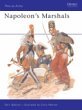
Napoleon's Marshals, Emir Bukhari. A good book but starting to look a bit dated now although the information is accurate and it is nicely illustrated with colour pictures of all the famous marshals in uniform.
Includes a brief service record of all of the main Marshals but is lacking on any great detail [SEE MORE]


Sgt. William Laurence
 A Dorset Rifleman: The Autobiography of Sgt. Williams Lawrence 1790-1869 , edited by Eileen Hathaway forward by Bernard Cornwell. An excellent book with updated information from the Hardback edition gives a real flavour of the Napoleonic Wars


Napoleon
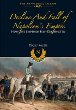 Decline and Fall of Napoleon's Empire - How the Emperor Self-Destructed, Digby Smith .
An interesting examination of everything the author believes Napoleon did wrong, painting a picture of a despot who failed to adapt his working methods to the increased scale of warfare from 1809 onwards. Does a useful job of bringing together all of the flaws in Napoleon's systems and his campaigns in one place. [read full review]
Decline and Fall of Napoleon's Empire - How the Emperor Self-Destructed, Digby Smith .
An interesting examination of everything the author believes Napoleon did wrong, painting a picture of a despot who failed to adapt his working methods to the increased scale of warfare from 1809 onwards. Does a useful job of bringing together all of the flaws in Napoleon's systems and his campaigns in one place. [read full review]


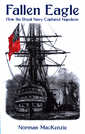 Fallen Eagle: How the Royal Navy Captured Napoleon, Norman MacKenzie. A fascinating book that looks at the crucial period between the battle of Waterloo and Napoleon going into exile on St. Helena, giving an insight into the political manoeuvring in Paris that led to Napoleon's second fall from power and the concerns of the British naval officers to whom he surrendered. [read full review]


Wellington
 Wellington: A Military Life, Gordon Corrigan. This in an excellent military biography of the Duke of Wellington. It focuses very heavily on Wellington the general, allows Corrigan to describe the wider campaigns in some detail, giving a good idea not only of what Wellington did, but also why he did it. [see more]


Films and Television


