Browse our Book Shop
Second World War
Books - Second World War - General Works
General Works
 Life in Britain & Germany on the Road to War – Keeping an Eye on Hitler, Anton Rippon & Nicola Rippon.
A parallel history of Britain and Germany in the inter-war years, looking at the rise of the Nazis, how it was seen in Britain, and what else was attracting attention in Britain in time, from the Jarrow Hunger March to the abdication crisis. An interesting approach that helps explain why events in Germany that in retrospect seem hard to ignore didn’t always get the attention we would expect at the time (Read Full Review)
Life in Britain & Germany on the Road to War – Keeping an Eye on Hitler, Anton Rippon & Nicola Rippon.
A parallel history of Britain and Germany in the inter-war years, looking at the rise of the Nazis, how it was seen in Britain, and what else was attracting attention in Britain in time, from the Jarrow Hunger March to the abdication crisis. An interesting approach that helps explain why events in Germany that in retrospect seem hard to ignore didn’t always get the attention we would expect at the time (Read Full Review)


 Holocaust – The Nazis’ Wartime Jewish Atrocities, Stephen Wynn.
A good introduction to the topic, covering many of the main elements of the holocaust, including the most infamous of the camps, the Wannsee Conference and some of the German planning behind the holocaust and their attempts to cover it up. Could do with a proper summary of the subject, but otherwise serves as a good introduction to the topic, which doesn’t pull its punches and leaves us in no doubt as to what happened (Read Full Review)
Holocaust – The Nazis’ Wartime Jewish Atrocities, Stephen Wynn.
A good introduction to the topic, covering many of the main elements of the holocaust, including the most infamous of the camps, the Wannsee Conference and some of the German planning behind the holocaust and their attempts to cover it up. Could do with a proper summary of the subject, but otherwise serves as a good introduction to the topic, which doesn’t pull its punches and leaves us in no doubt as to what happened (Read Full Review)




 Flight from Colditz, Tony Hoskins.
A look at a recent successful attempt to see if the famous glider constructed by POWs in the attic of Colditz Castle could actually have flown, starting with a brief account of the main escape attempts from the castle and a longer examination of the original glider project, followed by the story of the 2012 recreation of the glider, which saw the replica successfully launched from the roof of the castle, glide across the river outside and land where the POWs had hoped it would! A splendid book written by the leader of the team that built and flew the successful replica(Read Full Review)
Flight from Colditz, Tony Hoskins.
A look at a recent successful attempt to see if the famous glider constructed by POWs in the attic of Colditz Castle could actually have flown, starting with a brief account of the main escape attempts from the castle and a longer examination of the original glider project, followed by the story of the 2012 recreation of the glider, which saw the replica successfully launched from the roof of the castle, glide across the river outside and land where the POWs had hoped it would! A splendid book written by the leader of the team that built and flew the successful replica(Read Full Review)


 German Soldier versus Polish Soldier, Poland 1939, David R. Higgins.
Looks at three battles between German and Polish infantry from the early days of the German invasion, when the Poles were still able to put up a decent fight, including a brief account of the development of both armies, how they were trained and equipped before moving onto good accounts of the battles, with excellent material from both sides
(Read Full Review)
German Soldier versus Polish Soldier, Poland 1939, David R. Higgins.
Looks at three battles between German and Polish infantry from the early days of the German invasion, when the Poles were still able to put up a decent fight, including a brief account of the development of both armies, how they were trained and equipped before moving onto good accounts of the battles, with excellent material from both sides
(Read Full Review)


 The Archaeology of the Holocaust, Richard A. Freund.
Looks at the use of non-invasive archaeological methods, including Geoscience (perhaps better known in the UK as geophysics) at two centres of Jewish life, in Rhodes and Vilna, both destroyed during the Holocaust. Focuses on the technical aspects of what was done, why it was done, the background story of the two areas and the way the local population was involved, rather than on the actual details of the digs(Read Full Review)
The Archaeology of the Holocaust, Richard A. Freund.
Looks at the use of non-invasive archaeological methods, including Geoscience (perhaps better known in the UK as geophysics) at two centres of Jewish life, in Rhodes and Vilna, both destroyed during the Holocaust. Focuses on the technical aspects of what was done, why it was done, the background story of the two areas and the way the local population was involved, rather than on the actual details of the digs(Read Full Review)


 Fortress Island Malta - Defence & Re-Supply During the Siege, Peter Jacobs.
Looks at the aerial battles over the island, and the many attempts to run supplies through the Mediterranean to the island. Includes detailed accounts of many of the convoys that attempted to bring supplies into Malta, as well as accounts of some of the key aerial battles, and the shifting balance of power in the air, as the British flew fighters onto the island and the Germans committed, withdrew and re-committed their forces to the battle. A good readable account of one of the most significant battles in the Mediterranean theatre
(Read Full Review)
Fortress Island Malta - Defence & Re-Supply During the Siege, Peter Jacobs.
Looks at the aerial battles over the island, and the many attempts to run supplies through the Mediterranean to the island. Includes detailed accounts of many of the convoys that attempted to bring supplies into Malta, as well as accounts of some of the key aerial battles, and the shifting balance of power in the air, as the British flew fighters onto the island and the Germans committed, withdrew and re-committed their forces to the battle. A good readable account of one of the most significant battles in the Mediterranean theatre
(Read Full Review)


 Aachen, the U.S. Army's Battle for Charlemagne's City in World War II, Robert W. Baumer.
A very detailed look at the US capture of Aachen, the first major German city to fall into Allied hands during the Second World War, and the German attempts to lift the siege and defend the city. Perhaps a little too detailed in places, but otherwise a good account of this iconic battle on the borders of the Third Reich
(Read Full Review)
Aachen, the U.S. Army's Battle for Charlemagne's City in World War II, Robert W. Baumer.
A very detailed look at the US capture of Aachen, the first major German city to fall into Allied hands during the Second World War, and the German attempts to lift the siege and defend the city. Perhaps a little too detailed in places, but otherwise a good account of this iconic battle on the borders of the Third Reich
(Read Full Review)


 World War II Infantry Fire Support Tactics, Gordon L. Rottman.
Perhaps a bit over-ambitious, looking at Soviet, German, US and British infantry fire support tactics, officially during the entire war, but with a focus on the later years. Useful in that it brings together material on different weapons that are normally seen in isolation, so we see how mortars, machine guns, infantry guns, anti-tank guns and hand-held AT weapons were meant to work together
(Read Full Review)
World War II Infantry Fire Support Tactics, Gordon L. Rottman.
Perhaps a bit over-ambitious, looking at Soviet, German, US and British infantry fire support tactics, officially during the entire war, but with a focus on the later years. Useful in that it brings together material on different weapons that are normally seen in isolation, so we see how mortars, machine guns, infantry guns, anti-tank guns and hand-held AT weapons were meant to work together
(Read Full Review)


 Daring Raids of World War Two - Heroic Land, Sea & Air Attacks, Peter Jacobs.
Covers an unexpectedly wide range of topics, including the sort of Special Forces raid that I was expected, but also including air raids and specific parts of larger operations, such as the disaster at Dieppe or the sinking of the Bismarck. Covers thirty raids, including a good mix of the familiar and the almost unknown, and provides a good cross section of the smaller scale British operations of the Second World War. [read full review]
Daring Raids of World War Two - Heroic Land, Sea & Air Attacks, Peter Jacobs.
Covers an unexpectedly wide range of topics, including the sort of Special Forces raid that I was expected, but also including air raids and specific parts of larger operations, such as the disaster at Dieppe or the sinking of the Bismarck. Covers thirty raids, including a good mix of the familiar and the almost unknown, and provides a good cross section of the smaller scale British operations of the Second World War. [read full review]


 World War II Tactical Camouflage Techniques, Gordon L. Rottman .
This is a fascinating little on a subject which impacted on all armies involved in the conflict, focusing on European and the Med war zones (so no Japanese or jungle patterns) It’s a surprisingly interesting read and a great resource for war gamers , model makers and reenactors. Chapters include principles, materials used, individual and vehicle camo and how gun positions were camouflaged . It looks at what worked well and what methods didn’t and those which made things worse! There are some fascinating sections on the techniques such as the use of light and shadow, using natural materials and the difference between cover and concealment. As you would expect from an Osprey book it is lavishly illustrated with colour illustrations by the superb Peter Dennis and filled with period black and white photos which really bring the subject to life. [read full review]
World War II Tactical Camouflage Techniques, Gordon L. Rottman .
This is a fascinating little on a subject which impacted on all armies involved in the conflict, focusing on European and the Med war zones (so no Japanese or jungle patterns) It’s a surprisingly interesting read and a great resource for war gamers , model makers and reenactors. Chapters include principles, materials used, individual and vehicle camo and how gun positions were camouflaged . It looks at what worked well and what methods didn’t and those which made things worse! There are some fascinating sections on the techniques such as the use of light and shadow, using natural materials and the difference between cover and concealment. As you would expect from an Osprey book it is lavishly illustrated with colour illustrations by the superb Peter Dennis and filled with period black and white photos which really bring the subject to life. [read full review]


 Snafu: Sailor, Airman and Soldier Slang of World War II, Gordon L. Rottman.
Focuses on navy and air force slang, with some army slang not covered in an earlier volume, covering the British, American and German forces. Gives a really interesting insight into the sort of things that concerned the fighting men on both sides of the conflict. [read full review]
Snafu: Sailor, Airman and Soldier Slang of World War II, Gordon L. Rottman.
Focuses on navy and air force slang, with some army slang not covered in an earlier volume, covering the British, American and German forces. Gives a really interesting insight into the sort of things that concerned the fighting men on both sides of the conflict. [read full review]


 A Chronology of World War II, David Jordan. An introduction to the Second World War with a narrative account of the fighting supported by two timelines, one for the war against German and one for the war against Japan. Good, but could have done with a combined timeline rather than the two split ones. [read full review]


 Behind the Lines - A Critical Survey of Special Operations in World War II, Michael F. Dilley. Uses a set of fixed criteria to examine the successes and failures of a wide range of Special Forces units during the Second World War, with a refreshing willingness to acknowledge successful attacks and well organised units as well as pick out flaws. [read full review]


 Why Germany Nearly Won, Steven D. Mercatante. Makes a convincing argument that quality was more important than quantity when deciding the outcome of the Second World War, from the initial German successes in the West and against the USSR to the final Allied victory. Looks at the quality of the equipment used on both sides, the training and experience of the armies and the quality of the higher commands and their battle plans and argues that these factors were more important than brute force in deciding the course of the war. A fascinating, well made argument. [Read Full Review ]


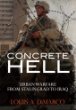 Concrete Hell - Urban Warfare from Stalingrad to Iraq, Louis A. DiMarco. Looks at nine very varied examples of urban warfare from the largely conventional fighting in Stalingrad in 1942 to the political manoeuvring required in more modern conflicts such as the battle for Ramadi in 2006-7. Looks at both the 'what' and the 'how' of urban warfare in an attempt to examine how the urban battle can be won in future. [read full review]


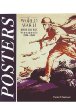 Posters of World War II, Allied and Axis Propaganda 1939-1945, Peter Darman. A beautifully produced look at the propaganda posters produced in seven of the main combatant nations of the Second World War, with a supporting text that explains who controlled poster production and useful individual captions. The text is good, but the brilliantly well printed posters are undoubtedly the stars of this very attractive book[read full review]


 The World at War, Taylor Downing. Looks at the making of the excellent ITV documentary series the World at War, examining the environment at ITV that allowed such an ambitious series to be made, the background of the team behind the series, the historical approach and use of sources and the decisions that went into the making of each of the twenty six episodes. [read full review]


 Ian Fleming's Commandos: The Story of 30 Assault Unit in WWII, Nicholas Rankin. Partly a history of 30 Assault Unit and partly a look at Ian Fleming's wartime service and Naval Intelligence. This is an accessible look at an interesting topic, with plenty of background material as well as some fascinating accounts of the technological intelligence gathering activities of the unit. [read full review]


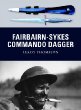 Fairbairn-Sykes Commando Dagger, Leroy Thompson. This is an excellent book in the new Osprey Weapons series. Written by an experienced author it offers a fascinating insight into an iconic weapon. The book traces the development and origins of this, the most lethal of fighting knives, with detail on its design, evolution and the training of the soldiers who were to use it to take the fight to Hitler with cold steel. From a collector's point of view it covers all the variations of design and also looks at its use and similar weapons in use in non British units. Packed with contemporary photographs and illustrations showing the weapons but also the lethal techniques employed in their use, the book also examines the iconic impact of the weapon and its use as a symbol of Special Forces around the world [read full review]


 If the Allies had Fallen: Sixty Alternative Scenarios of World War II, ed. Dennis E. Showalter & Harold C. Deutsch. A collection of alternative scenarios looking at sixty of the most familiar 'what ifs?' of the Second World War, with some articles examining why they didn't happen and others looking at what might have followed if they had [read full review]


 Blitzkreig no Longer - The German Wehrmacht in Battle, 1943, Samuel W. Mitcham, Jr. A look at the campaigns fought by the German armed forces during 1943, the year that saw the initiative permanently slip from their hands, with the failure of the Kursk offensive, defeat in the Atlantic, Tunisia, Sicily and southern Italy and the collapse of fascist power in Italy. [read full review]


 British and Commonwealth War Cemeteries, Julie Summers. A look at the impressive achievements of the Imperial War Graves Commission in building and maintaining tens and thousands of cemeteries and memorials to the dead of the two World Wars and a look at commemoration of the dead in the post-war world, including the National Arboretum [read full review]


 Escape from the Third Reich: Folke Bernadotte and the White Buses, Sune Persson. An account of the remarkable Swedish rescue effort that with Danish help rescued 17,000-20,000 people from Nazi concentration camps in the dying days of the Third Reich. A fascinating view of the chaotic last days of Nazi Germany, and of a very impressive humanitarian achievement. [read full review]


 Images of War: Auschwitz Death Camp, Ian Baxter. A chilling photographic history of the Auschwitz Death Camp, from its original construction as a concentration camp, through its expansion into a massive centre of slave labour and extermination, and on to the Soviet liberation of the camp before looking at the state of the camp today [read full review]


 Images of War Malta GC: Rare Photographs from Wartime Archives, Jon Sutherland & Diane Canwell. A photographic look at Malta during the Second World War, covering the war in the air, the ground defences of the island, the Blitz, relations between the Maltese and the garrison, the convoys that brought essential supplies to the besieged island, and the victory celebrations that followed the end of the campaign in North Africa and the end of the siege [read full review]


 Dazzled and Deceived: Mimicry and Camouflage, Peter Forbes. Beginning with the discovery of mimicry in nature in the mid-Nineteenth century Forbes traces the development of our understanding of the processes behind mimicry and camouflage, both in nature and during the two World Wars. [read full review]


 World War II Axis Booby Charges and Sabotage Tactics, Gordon L. Rottman.
This examination of German and Japanese booby traps of the Second World War benefits from an unusually large number of extracts from contemporary reports, designed to allow Allied troops to safely bypass the traps under discussion. The same source provides a large number of illustrations, giving the book a real flavour of the times. The result is a informative look at an interesting topic, with a focus on the details that were important at the time [see more].
World War II Axis Booby Charges and Sabotage Tactics, Gordon L. Rottman.
This examination of German and Japanese booby traps of the Second World War benefits from an unusually large number of extracts from contemporary reports, designed to allow Allied troops to safely bypass the traps under discussion. The same source provides a large number of illustrations, giving the book a real flavour of the times. The result is a informative look at an interesting topic, with a focus on the details that were important at the time [see more].


 Fateful Choices, Ian Kershaw. A fascinating book that looks at ten of the most important turning points during the Second World War, starting with the British decision to stay in the war in 1940 and ending with the German decisions to declare war on the United States and to turn the persecution of the Jews into the Final Solution. Kershaw has managed to find a new approach to the history of the Second World War, and gives us an interesting insight into the systems of government in the main combatant nations of the Second World War [see more]


 The Armed Forces of World War II: Uniforms, Insignia and Organization, Andrew Mollo. This is an invaluable reference book that looks at the uniforms, rank insignia, organisation and even the major campaigns of every armed service of all of the main and most of the minor combatants of the Second World War. [see more]


 The Second World War: I: The Gathering Storm, Winston S. Churchill. The first volume of one of the classic histories of the Second World War. Churchill was close to the centre of many of the events covered in this book, although he did not become Prime Minister until the very end of the period covered. The first half of this book looks at the rise of Hitler and the road to war, while the second half covers the invasion of Poland, the Phoney War and the campaign in Norway, before finishing with the events that took Churchill into No. 10 [see more]


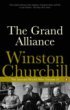 The Second World War: III: The Grand Alliance, Winston S. Churchill. Book Three of Churchill's grand history of the Second World War covers the events of 1941. Britain started the year fighting alone against Hitler's Germany, but ended it as part of the Grand Alliance with the United States and the Soviet Union. Despite this generally positive theme, this was a dark period, with Pearl Harbor and the rapid Japanese conquests in the east, and massive German gains in Russia [see more].

Fallen Eagle , Cross, R., Michael O’Mara Books, London, 1995.


A World at Arms : A Global History of World War II , Weinberg, Gerhard L, Cambridge University Press, 1994


World War II , Young, Brigadier Peter. (Ed), Orbis Publishing, London, 1978.


The World at War , A new edition of an excellent book based on the massive British TV series of the same name this book covers all theatres and aspects of the war with good maps and photographs. A must for students studying this period for an excellent overview.


The Imperial War Museum Book of War Behind Enemy Lines , Julian Thompson, A good history of behind the lines warfare in World War 2. Thompsons military experience adds greatly to his skillful examination of this area of warfare.


Atlas of the Second World War , Young, Brig P. (Ed), Weidenfeld & Nicolson, London, 1973.


Atlas of the Second World War , Keegan, J. (Ed), Times Books / Guild Publishing, London, 1989.


Great Battles of World War II , Macdonald, John, Guild Publishing (BCA), London, 1986.


Fortress Europe: European Fortifications of World War II , J.E.Kaufmann & R.M.Jurga, a detailed study of the huge number of fortifications erected across Europe during the Second World War.


World War II , Matanle, Ivor, Godalming, 1995 (Second Edition).


Battlefields of the Second World War , BBC Worldwide Ltd, London, 2001, Richard Holmes


On the Psychology of Military Incompetence , Pimlico, London, 1994 (first published 1976), Norman Dixon


The Home Front
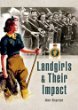 Land Girls & Their Impact, Ann Kramer. For a long time a forgotten army, this book looks at the remarkable achievements of the Women's Land Army during the Second World War, the recruitment, training and daily lives of the land girls and lumber jills, and the reactions (both positive and negative) they inspired in rural communities [read full review]


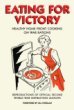 Eating for Victory. This volume is a collection of food information leaflets issued in Britain during the Second World War. It contains a wide range of leaflets, from simple collections of recipes to advice on nutrition. Some concentrate on using wartime ingredients such as dried eggs, while focus on how to make the best of small quantities of things that were in short supply, such as sugar [see more].


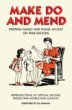 Make Do and Mend. This book is a collection of wartime Make Do and Mend leaflets issued in Britain during the Second World War. While it is food rationing that attracts most attention now, this book reminds us that clothes were also strictly rationed while fuel was in short supply. The majority of these leaflets give advice on how to repair clothes, how to avoid damaging clothes or how to make the best use of fuel for heating, hot water and cooking. [see more]


Biographies and Autobiographies
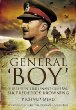 General 'Boy' - The Life of Sir Frederick Browning, Richard Mead. Best known for his role in Operation Market Garden, 'Boy' Browning was far from a typical Guards officer, growing up with theatrical connections in a family linked to the Savoy Hotel, and involved in the importing of Hennessy brandy into the UK, industry, while Boy married Daphne du Maurier and worked for Princess Elizabeth and the Duke of Edinburgh after the war. [read full review]


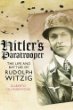 Hitler's Paratrooper - The Life and Battles of Rudolf Witzig, Gilberto Villahermosa. A biography of the German paratrooper who planned the attack on Fort Eben Emael in May 1940, before taking part in the costly victory in Crete, and then fighting in North Africa, on the Eastern Front and in Holland as the elite paratroopers were increasingly used as standard infantry. [read full review]


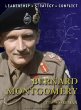 Bernard Montgomery, Tim Moreman. Focusing on his time in North Africa and in northern Europe in 1944-45, Moreman's biography of Britain's best known general of the Second World War looks at his style of leadership and the reasons for his successes and his failures, and the famous character flaws that poisoned his relationship with his American allies. [read full review]


 Report on Experience, John Mulgan. A thoughtful if often rather melancholy account of one man's experiences of the British Army during the Second World War, encompassing time spent in England, in the Western Desert and in Greece, cooperating with the partisans, focusing more on his views on war and the British at war than on the battles he took part in. [read full review]


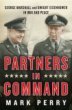 Partners in Command, Mark Perry. This is a dual biography of George Marshall and Dwight Eisenhower, the two most important American army officers of the Second World War. Perry looks at the way their two careers intertwined and the part they played in creating and maintaining an effective coalition to fight the war. [see more]


 Hitler 1889-1936: Hubris , takes the life of Hitler from birth and childhood, through Vienna, the Trenches of the First World War, and into politics, stopping with his gaining of power in Germany.


 Hitler 1936-1945: Nemesis , Ian Kershaw: Takes the story of Hitlers life from his gaining of power in Germany, through the buildup to war, and on to the last days in the Berlin bunker


The Last Days of Hitler , Joachimsthaler, A., Cassell Military, London, 2000.


Winston Churchill
Films
 WWII Lost Films (Blu-ray), The History Channel. Ten 45 minute episodes filled with very impressive high quality colour film, and following the wartime experiences of twelve Americans (including an Austrian émigré and the son of Japanese immigrants). Their stories make these documentaries much more interesting than similar films, giving them a sense of purpose that is often lacked. [read full review]


 A Bridge Too Far , 1977, directed by Richard Attenborough and starring, amongst others, Dirk Bogarde, James Caan, Michael Caine, Sean Connery, Edward Fox, Elliott Gould, Gene Hackman, Anthony Hopkins, Laurence Olivier, Ryan O'Neal, Robert Redford, Maximilian Schell and Liv Ullmann.


World At War - Complete Series Boxset , The complete 11 tape set of the ground breaking British documentary series which covers the whole of the Second World War from the pre war build up and Hitlers rise to power to the final bitter struggle. Using eye witness accounts from survivors from both sides it is largely unbiased and an excellent resource for schools.


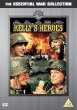 Kelly's Heroes. A classic war film depite being full of historical inaccuracies and stereotypes (especially the German Tiger commander and Oddball's Hippy 20 years before Hippies were about) but ignore this and treat it as it was intended, as a tongue firmly in cheek wartime adventure [see more]

