 |
|
|
Aircraft - Locations - Group and Duty - Books
No.424 "Tiger" Squadron was a RCAF squadron that formed in Britain in October 1942 as part of Bomber Command, originally as part of No.4 Group, but from 1 January 1943 as part of No.6 (RCAF) Group.
The squadron flew its first operation on 15 January 1943, and spent the next three months operating with Bomber Command, before moving to North Africa to support the invasions of Sicily and Italy. The ground echelon left Britain on 15 May 1943, followed by the aircraft on 5 June, and the squadron was back together at Kairouan on 23 June 1943.
On 26 September 1943 the squadron departed for the UK, leaving its Wellingtons behind. On its return to Britain the squadron received the Halifax III, beginning operations with Bomber Command on 18 February 1944. The squadron took part in 123 bombing raids and 33 minelaying missions while flying the Halifax. The Avro Lancaster arrived at the start of 1945, and was used for the first time on 1 February 1945, remaining in use to the end of the war. During this period it was used on 29 bombing and 13 minelaying raids.
After the end of the war in Europe No.424 was not allocated to Tiger Force (for the war against Japan), and instead became a transport squadron, transporting troops to and from the continent before disbanding on 15 October 1945.
Aircraft
December 1942-April 1943: Vickers Wellington III
February-October 1943: Vickers Wellington X
December 1943-January 1945: Handley Page Halifax B.Mk III
January-October 1945: Avro Lancaster I and III
Location
15 October 1942-19 April 1943: Topcliffe
19 April-3 May 1943: Leeming
3 May-15 May 1943: Dalton
16 June-30 September 1943: Kairouan/ Zina
6 November 1943-15 October 1945: Skipton-on-Swale
Squadron Codes: QB
Duty
October-December 1942: Bomber squadron with No.4 Group
1 January 1943-December 1945: Bomber squadron with No 6 (RCAF) Group
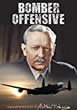 Bomber Offensive, Sir Arthur Harris.
The autobiography of Bomber Harris, giving his view of the strategic bombing campaign in its immediate aftermath. Invaluable for the insights it provides into Harris’s approach to the war, what he was trying to achieve and the problems he faced. Harris perhaps overstates his case, not entirely surprisingly given how soon after the end of the war this book was written (Read Full Review)
Bomber Offensive, Sir Arthur Harris.
The autobiography of Bomber Harris, giving his view of the strategic bombing campaign in its immediate aftermath. Invaluable for the insights it provides into Harris’s approach to the war, what he was trying to achieve and the problems he faced. Harris perhaps overstates his case, not entirely surprisingly given how soon after the end of the war this book was written (Read Full Review)


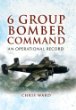 6 Group Bomber Command: An Operation Record, Chris Ward. This is a very detailed reference book that looks at the wartime service of the Canadian group in RAF Bomber Command. A detailed narrative history of the group is followed by a series of chapters on each squadron, with a brief history, list of stations, commanding officers and types of aircraft, and most impressively a list of every individual aircraft to serve with each squadron and its fate [read full review]
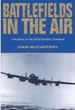 Battlefields in the Air: Canadians in the Allied Bomber Command, Dan McCaffery. A look at Bomber Command's controversial campaign against Germany, and the role played in it by the Canadian pilots of No.6 Group. McCaffery's well researched text is supported by eye witness accounts from both the Canadian air crew and the German targets of the bombing campaign.
 Halifax Squadrons of World War II , Jon Lake. This is a very good book on the combat record of the Handley Page Halifax. It covers much more than just its role as a front line bomber, with chapters on the Halifax with Coastal Command, the Pathfinders and SOE, amongst others. [see more]
 Lancaster Squadrons 1944-45, Jon Lake. A well balanced look at the career of the Avro Lancaster in 1944-45, the period most famous for the systematic night bombardment of German cities. This was also the period that saw the Lancaster used to support the invasion of France, and the period that saw 617 Squadron drop Barnes Wallis's huge streamlined bombs with great precision. [see more]
Bookmark this page:
 Delicious
 Facebook
 StumbleUpon