 |
|
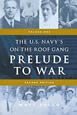


The ‘On-the-Roof gang’ were a group of 176 individuals who were trained to intercept Japanese radio transmissions in a classroom on the roof of the main US Navy building in Washington DC in the inter-war years. They played a key role in the gathering of intelligence about the plans and actions of the Imperial Japanese Navy before and during the Second World War, providing the raw material used by the cryptographers.
The story starts with a number of talented individuals. We meet Harry Kidder, a radio enthusiast who in 1924 detected Japanese transmissions in his spare time (although didn’t realise what they were at first) and Laurance Safford, who was called back from command of a small warship in Chinese waters to take command of a new ‘Research Desk’ in the Code and Signal Section of the Department of Naval Communications (after reporting problems caused by unknown but powerful radio transmissions, which were actually coming from the Japanese Navy). Kidder was able to work out that the Japanese had developed their own version of Morse code to transmit the 48 characters of the katakana script, and were using it for their military transmissions. This system could be used to transmit plain text messages, which just needed someone who could read Japanese to understand, but the most important were encoded. In the 1920s the most common system used by the Japanese used groups of three katakana characters, each of which matched an entry in their code book, which fortunately had been stolen from the Japanese consulate in New York in 1921.
We then follow Safford, Kidder and an ever increasing cast as they developed the US Navy’s intercept service. One of Safford’s earliest successes was the establishment of a dedicated training school for katakana interception. This was located in a small concrete room built on the roof of the main US Navy building in Washington, a location that gave its graduates their nickname, the ‘On-the-Roof’ gang. One thread throughout the book are the twenty-five classes taught on the roof, before training moved to a base on Bainbridge Island, near Seattle. These classes provide the names that we follow later on in the story, as they go out into the field.
A second thread is the experiences in the field. A key part of it at this stage was the establishment of a series of intercept bases. The first, Station ABLE in Shanghai, was already active when the story starts. New bases were founded on Guam, Hawaii and the Philippines, later joined by bases on the US mainland and Australia. This is where the training was put into use, and started to produce some impressive results. However we do end with the failure to predict the Japanese attack on Pearl Harbor – although some were expecting a surprise attack of that type, the target and date came as a surprise.
The book is written in the style of a series of personal narratives, tracing the activities of individual members of the gang, as well as Safford and Kidder. This inevitably means that some of the details have been extrapolated by the author – exactly what individuals were thinking as they went about their lives in the 1920s is largely unknowable – but he did have access to some very good sources. When the author started working on this subject, some of the gang were still alive and able to provide direct testimony. In addition the National Cryptologic Veterans Association has a massive archive, a magazine and could provide contacts who had worked with the ‘Gang’.
The author is well qualified to write this book – he worked in radio intelligence himself, studied under Dr David Hatch, the technical director of the Center for Cryptologic History, where he wrote a master’s thesis on the On-the-Roof Gang, and was awarked the ‘On-the Roof Gang’ award in 2001 for his work in naval cryptology. His work is thus very credible and his expertise shines through. The style he has chosen works very well for this story, and really takes us into their world, tracing how the organisation started by a handful of people evolved into a sizable professional system that would play a major role in the course of the Pacific War.
Chapters
1 – Harry Kidder
2 – Laurance Safford
3 – The Research Desk
4 – The Meeting
5 – The Plan
6 – Station ABLE
7 – Operational Planning
8 – USS Marblehead
9 – Reconstruction
10 – Craven’s Decision
11 – Station BAKER
12 – Station HYPO
13 – To the Roof!
14 – CNO Announcement
15 – The Curriculum
16 – Class #1
17 – Christmas as Ma Travers’s Guest House
18 – Class #1 Continues
19 – Class #2
20 – Station CAST
21 – Back to the Fleet
22 – Class #3
23 – Orange Grand Maneuvers of 1930
24 – Class #4
25 – Visit to Station CAST
26 – Class #5
27 – Visit to Station BAKER
28 – Class #6
29 – Visit to Station HYPO
30 – Classes #7 and #8
31 – Station S
32 – Pappy’s Return
33 – Class #9
34 – President Steamship Lines
35 – Class #10
36 – Class #11
37 – Orange Grand Maneuvers of 1933
38 – Class #12
39 – McClaran’s Appeal
40 – Class #13
41 – BAKER moves to Marivales
42 – Class #14
43 – CAST moves to Mariveles
44 – Class #15
45 – HYPO Moves to Heeia
46 – ABLE Moves back to Shanghai
47 – Class #16
48 – Tragedy in DC
49 – CAST Moves to Cavite
50 – Classes #17 and #18
51 – Developments in HFDF
52 – Class #19
53 – Unrest in China
54 – Problems at Station BAKER
55 – Class #20
56 – Air Activity in China
57 – The Panay Incident
58 – Pacific HFDF Net
59 – Class #21
60 – Station V
61 - Class #22
62 – IJN Code Change
63 – Improvements at Station ABLE
64 – Station S Moves to Bainbridge Island
65 – Class #23
66 – CAST Moves to Corregidor Island
67 – Class #24
68 – Missing in Samoa
69 – A Schoolhouse Option
70 – Pappy Reinstated
71 – Typhoon
72 – Dependents Evacuated from Station CAST
73 – Typhoon’s Aftermath
74 – Class #25
75 – Station K
76 – Codebreaking in DC
77 – Intelligence Cooperation
78 – Codebreaking in Hawaii
79 – Palns for Pappy
80 – Operations in Samoa
81 – Keeping Track of the Carriers
82 – Station ABLE Closes
83 – Station AB
84 – Station CAST Absorbs Station ABLE
85 – Dependents Evacuated across the Pacific
86 – Station S Operations
87 – Winds Instructions
88 – Station CAST Listens for Winds Message
89 – Another IJN Code Change
90 – Station HYPO Listens for Winds Message
91 – Station BAKER Listens for Winds Message
92 – Station S Listens for Winds Message
93 – Station M Listens for Winds Message
94 – Winds Message Confusion
95 – Station S Intercepts 14-Part Message
96 – Where are the Carriers?
97 – The Final Part
98 – Kidder in Greenland
99 – Day of Infamy
Author: Matt Zullo
Edition: Paperback
Pages: 446
Publisher: ZooHaus
Year: 2026