 |
|
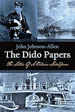


Bryan Godfrey-Faussett had a distinguished career in the Royal Navy, retiring as a captain having become closely associated with King George V, later serving as his naval aide-de-camp during the First World War. However like every senior officer of this period he began his naval career as a teenage midshipman, the lowest ranked officer on a warship. For Godfrey-Fausett that time was spent on HMS Dido, a wooden corvette with steam power and sails (although you’d never guess she had steam engines from his diary!).
The book starts with three introductory chapters – a brief biography of Godfrey-Faussett, a look at HMS Dido and extracts from the Admiralty’s Africa Pilot describing the various ports and locations the Dido visited. We then move on Godfrey-Fausett’s own work, starting with his scrapbook. This is a fascinating selection of the images that caught his attention – mostly extracts from European publications. We then move onto the text – the letters themselves. These were his copies of letters he sent home, and provide a vivid insight into his immediate reactions to his life onboard and to the events around him.
One of the first things that becomes apparent is how you Godfrey-Faussett was when he was writing – we are several months into the diary before he turns 16. That helps explain his enthusiasm for exploring the places he was visiting for the first time, his mention of the number of pets on the ship (many monkeys!), and the frequent requests for more letters from home (along with repeated instructions on where to send them – clearly at this point in his career he had little experience with the difficulties of reliably getting post from Britain to a boat operating somewhere along the west coast of Africa!
The Diary starts on the Dido at Portsmouth, the day before she departed for West Africa. We follow Godfrey-Faussett on the trip south, visiting Madeira on the way to Sierra Leone. Godfrey-Faussett is an entertaining guide, giving us insights into life in the wardroom (surprisingly similar to the sort of thing you might read in a Hornblower, although with much better communication links back to Britain), each of the places he visits, and his amusements on shore. Unsurprisingly there are a lot of accounts of hunting expeditions, a mix of trophy and food hunting, as well as horse riding, swimming and fishing.
The Dido spent much of the period here operating along the west coast of Africa, as well as visiting a variety of Atlantic islands and South Africa. This was her second posting along this coast, and came at an interesting time – before the ‘scramble for Africa’ left most of this coastline firmly in European hands. Instead we see a mix of control, with European ports scattered along the coast. Britain controls shallow coastal enclaves in Sierra Leone and the Gold Coast, and was about to claim Walvis Bay (Namibia), while most of the continent was still in African hands. We see two results of this in Godfrey-Faussett’s diary and letters. First, African rulers are often mentioned, and one of the main events to take place was a formal palaver between a group of neighbouring rulers which took place onboard to solve a number of issues between them. Second, the ship visited a number of places occupied by other European powers (such as the Portuguese held island of Fernando Po) far more often than one might expect in diaries from only a few years later.
The most significant military event of this period was the First Anglo-Boar War, a short conflict which resulted from the British annexing the Transvaal a few years earlier. This soon triggered a Boer uprising, which led to a series of victories over a poorly led British relief column, ending with a major British defeat at Majuba. The Dido was sent to South Africa during the conflict and contributed to a naval column that joined the army, suffering three dead and three wounded at Majuba. Godfrey-Faussett was enthusiastic about this contribution and disappointed that he wasn’t selected to join the force. His general attitude to this conflict gives us an insight into the enthusiastic imperialism of the British Empire at this point – before the bruising experiences of the Second Boar War and First World War.
This is a fascinating collection of letters that give us a rare insight into the life of a junior officer of the Royal Navy at the height of the ‘Pax Britannica’.
Chapters
1 – The Life of Bryan
2 – HMS Dido
3 – Dido’s commission
4 – The scrapbook
5 – The letters, 1879
6 – The letters, 1880
7 – The letters, 1881
Author: John Johnson-Allen
Edition: Paperback
Pages:
Publisher: Whittles
Year: 2025