 |
|
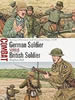


This book covers a massive topic, some of the largest battles on the Western Front, which brought about the end of the stalemate that had gripped the front since the end of mobile warfare in 1914. However picking this long period does have some advantages – it allows the author to look at how both sides performed on the offensive and the defensive, allowing for a more rounded comparison than if the book had limited itself to either the German or Allied advances.
We start with a brief look at the strategic situation in the spring of 1918, where the collapse of Imperial Russia had given the Germans the chance to move a large number of divisions west to give them the numerial advantage on the Western Front. However this lead wouldn’t last for long, as the US Army continued its build-up in France. As a result the Germans believed that they had a limited time to launch an attack that could win them a decisive victory. One minor quibble is that the map showing how the front line moved on the British front in this period doesn’t quite stretch far enough west to show that the French coast runs north-south just off the map, with Amiens only 40 miles inland – if the Germans could reach the coast here they would cut off the BEF in a similar pocket to the one that forced the evacuation from Dunkirk in the next war. However the map does show the different scale of the German and Allied advances, with the massive German attacks producing big salients in the line, while the Allied advances pushed the entire front line back, and by a bigger distance than the greatest German advance.
The section on the German infantry covers the basics of German conscription, then looks in more detail at Infanterie-Regiment 158, a pre-war regiment that fought throughout the war, before moving on to look at the main divisions involved in the battles examined here.
On the British side we get a look at one of the earliest of the Pals battalions, the 16th Battalion (1st City) Manchester Regiment, formed in response to newspaper adverts of August 1914 and entering the front in January 1916. We then move on to look at their division, the 30th, which fought on the Somme and at Third Ypres. We then wwitch to the 5th Battalion, East Lancashire Regiment, a Territorial regiment formed before the war and that served in the Middle East before reaching the Western Front in 1917. Next is the 20th Hussars, a pre-war cavalry regiment that saw significant action in 1914. We then move onto conscription, followed by a look at the possible manpower crisis of 1918.
We then move on to a look at infantry training. Here the Germans had one big advantage – their pre-war conscript army required large scale training grounds and experience of large scale training, and we get a look of the major specialist ones. We then move onto the development of the ‘shock tactics’ that were used in the German spring offensives. These had been developed over the course of the war before finally being codified in a new doctrine for the attack over the winter of 1917-18.
On the British side the biggest changes came after the Somme, where a new doctrine called for platoons made up of four specialist sections – Rifle, Bomber, Rifle-Bomber and Lewis Gun. This meant that each platoon was a mixed-arms unit capable of operating semi-independently. Training had greatly improved as the war went on, with more changes after conscription increased the flow of recruits. Both sides learnt from each other, so we see significant similarities between them.
Next comes Morale, Motivation and Logistics. The morale of the German army of 1918 is one of the biggest issues of the war, with the German far right developing the ‘stab in the back’ myth, claiming that the army was undefeated and was betrayed by the enemy at home. While it is true that civilian morale was falling, the evidence suggests that morale in the army was high at the start of 1918, encouraged by the victory on the Eastern Front. On the British side morale was perhaps more variable, but the arrival of the Americans along with new weapons such as the tank bolstered morale. The British army was better supplied than the German, and (despite some of the stereotypes) food was normally monotonous but decent and provided in good quantities.
We then move on to three example battles – Manchester Hill (21 March) at the very start of the German spring offensive, Rifle Wood (1 April), a British victory towards the end of the first German offensive and the battle of the Selle (20 October), a British attack two months into the ‘100 days’.
Manchester Hill sees the first of our two units – 50.Infanterie-Divison and the 16th Manchesters clash. This was a classic example of the sort of victories the Germans won on the first days of this offensive. A very heavy bombardment isolated the Manchesters who were concentrated in a series of defensives on the gentle rise that became known as ‘Manchester Hill’. The Germans were able to take advantage of poor visibility to advance on either side of the hill, and the British commander failed to take his chance to retreat into the next line of defenses (part of the Briitsh doctrine of the time). The battle ended with the isolated and surrounded Manchesters surrendering, with around 500 men captured and around 80 killed. Just over 100 survivors escaped to continue fighting. On the German side we see flexible leadership, with the flanking units acting independently to take advantage of their initial successes.
Rifle Hill involved the 20th Hussars, who were using their horses to give them the mobility to move to threatened areas. They were part of a larger cavalry unit, one part of which actually managed to carry out a traditional cavalry charge on 30 March when they came across a German formation on the march! The 20th Hussars were given the task of recapturing a small wood to the north of Moreuil Wood, from where the Germans had a direct view of Amiens and the Paris Railway. The wood was to be attacked by three cavalry brigades attacking on foot (part of their training). This battle came close to the end of the first of the German spring offensives, and the Allied victory perhaps demonstrates that the German infantry had run out of steam.
By the time we reach our final battle, the Selle, the position had been utterly transformed. The German spring offensives had run out of steam after giving the Allies a real scare, and on 8 August the Allies had gone onto the attack themselves at the start of the battle of Amiens. Over the next two months the Allies carried out a series of offensives which forced the Germans into a general retreat across the entire front – on the British sector this saw them sweep west across the Ypres and Somme battlefields, liberating large parts of Belgium and pushing the Germans almost out of France. By mid October the Germans had formed a new line behind the Selle River, close to the Franco-Belgian border (and not far from the site of the BEF’s early battle of Mons). Here we see a British army capable of carrying out a complex night attack, and overwhelming a sizable German force that had had some time to prepare its defences.
The general conclusion is that the German successes of the spring of 1918 were wasted because the German High Command had lacked a clear objective for their offensives but instead hoped that early victories would reveal a suitable target. We also see how the British army had improved its tactics massively during the war, learning from earlier experiences to become a war winning force capable of pushing good quality German forces out of defensive positions that would have stopped them earlier in the war.
Chapters
The Opposing Sides
Manchester Hill,21 March 1918
Rifle Wood, 1 April 1918
The Selle, 20 October 1918
Analysis, German effectiveness, British effectiveness
Aftermath
Unit Organizations
Author: Stephen Bull
Edition: Paperback
Pages: 82
Publisher: Osprey
Year: 2024